
GraphQL has become one of the most discussed approaches to building modern application programming interfaces, especially for products that serve many different clients from a single backend. Yet despite its popularity, it is still widely misunderstood. Some teams treat it as a drop-in replacement for REST, others assume it is a database technology, and many adopt it without a clear sense of when it actually pays off. The reality is more specific and more interesting.
At its core, GraphQL is a query language for APIs and a runtime for fulfilling those queries against a typed schema. It does not store data, dictate a transport protocol, or replace your business logic. Instead, it provides a precise contract between clients and servers, and a predictable way to ask for exactly the data a screen or feature needs. This article explains how GraphQL works, what its building blocks are, how requests are processed, and when it is the right tool, drawing on the official GraphQL specification and learning materials maintained by the GraphQL Foundation.
By the end, you should be able to evaluate whether GraphQL fits your product, what trade-offs you accept by adopting it, and which alternatives may still be a better choice for simpler systems.
What GraphQL Means in Practice
GraphQL is defined by an open specification that describes a query language and a corresponding execution engine. The specification is intentionally narrow: it covers how operations are written, how a schema is structured, how requests are validated, and how responses are shaped. It does not prescribe how data is stored, how authentication is performed, or how services communicate internally.
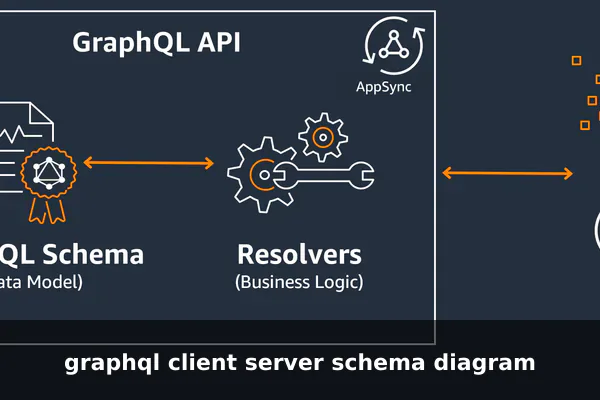
That separation matters. A GraphQL API sits in front of whatever data sources a team already has, including relational databases, document stores, internal microservices, third-party APIs, or in-memory caches. The schema describes what capabilities the API offers, while resolver functions describe how those capabilities are fulfilled.
Schema-First Thinking
The schema is the contract. It declares the types of data the API exposes, the fields available on each type, and the operations clients can perform. Because the schema is strongly typed, both clients and servers can rely on consistent shapes and validate behavior at build time, not only at runtime.
Client-Driven Data Selection
Unlike traditional resource-based APIs where the server decides the response shape, GraphQL lets the client specify the fields it wants. The server returns a response that mirrors the structure of the request, which makes it easier to avoid sending unused data over the network.
The Core Pieces of a GraphQL API
To work with GraphQL effectively, it helps to know the building blocks defined in the official learning guide. These pieces are deliberately small in number, which keeps the mental model manageable.
Types and Fields
- Object types describe entities in your domain, such as User, Order, or Article, each with a set of named fields.
- Scalar types represent leaf values like String, Int, Float, Boolean, and ID. Custom scalars are also supported.
- Enums, interfaces, unions, and input types let schema authors model constrained values, shared behavior, polymorphism, and structured arguments.
Operations: Queries, Mutations, and Subscriptions
Clients interact with a GraphQL API through three operation types:
- Query for reading data without side effects.
- Mutation for changing server-side state.
- Subscription for receiving a stream of updates, typically over a long-lived connection.
Resolvers
Each field in the schema is backed by a resolver, a function that knows how to produce the value for that field. Resolvers may read from a database, call another service, transform data, or return a computed value. The resolver layer is where business logic, data access, and authorization decisions usually live.
Introspection
A distinctive feature of GraphQL is that the schema itself is queryable. Clients and tooling can ask the server which types and fields exist, which makes documentation, code generation, and editor autocompletion straightforward.
How a GraphQL Request Works
Understanding the request lifecycle clears up a lot of confusion. According to the specification and reference implementations such as GraphQL.js, a typical request follows a predictable path.
1. Parsing
The server receives an operation as a string and parses it into an abstract syntax tree. If the syntax is invalid, the server returns an error before doing anything else.
2. Validation
The parsed operation is validated against the schema. The server checks that requested fields exist on the correct types, that arguments are well-typed, that fragments are usable, and that the operation respects the rules of the language. Invalid operations are rejected with structured error messages.
3. Execution
Once validated, the server walks the operation field by field, calling resolvers as needed. Sibling fields can often be executed in parallel, while child fields wait for their parents to resolve. This produces a tree of values that mirrors the shape of the request.
4. Response
The server returns a JSON object with two well-known top-level fields: data, containing the requested values, and optionally errors, containing structured information about anything that went wrong. This predictable response format is one of GraphQL’s defining traits.
GraphQL Over HTTP and Common Server Behavior
GraphQL is transport-agnostic in principle, but in practice most APIs are served over HTTP. The GraphQL over HTTP specification, currently maintained as a working document on the GraphQL Foundation’s site, defines how servers should behave to maximize interoperability.
Methods and Bodies
- POST is the most common method, with a JSON body containing the query, optional variables, and an optional operationName.
- GET can be used for queries by encoding the operation in the query string, which is useful for caching and links.
- Mutations are typically restricted to POST because they change state.
Headers and Media Types
Servers commonly accept application/json request bodies and indicate their response format with appropriate media types. The over-HTTP specification clarifies how to negotiate content types and handle errors consistently across implementations.
Single Endpoint
Most GraphQL APIs expose a single endpoint such as /graphql. Routing, field selection, and behavior are determined by the operation itself rather than by the URL path, which is a significant departure from REST.
Why Teams Use GraphQL
The motivations for adopting GraphQL are usually practical rather than ideological. They tend to cluster around a few recurring problems with traditional API design.
Avoiding Overfetching and Underfetching
With REST endpoints, clients often receive more data than they need, or have to make several round trips to assemble a screen. GraphQL lets the client request exactly the fields it uses, which can reduce payload size and request volume, especially on mobile networks.
Serving Multiple Clients From One API
Web, iOS, Android, smart TVs, and partner integrations rarely need the same data shape. A single GraphQL schema can serve all of them because each client picks the fields it needs, instead of forcing the server to maintain multiple custom endpoints.
Composing Data From Several Backends
Resolvers can pull from many sources behind the scenes. A single query might combine relational data, search results, and remote service calls into one coherent response, hiding backend complexity from the client.
Strongly Typed Contracts
The schema enables type-safe client code, automated documentation, and confident refactoring. Teams can generate client types from the schema and detect breaking changes long before they reach production.
When GraphQL Is a Good Fit
Based on the official best practices guide and common industry usage, GraphQL tends to shine in specific situations:
- Mobile and bandwidth-sensitive apps, where minimizing payload size and round trips matters.
- Multi-platform products where one backend serves many distinct front ends with different data needs.
- Complex, evolving domains in which relationships between entities are deep and varied.
- Aggregation layers that sit in front of several microservices or legacy systems.
- Dashboards and feeds that stitch together heterogeneous data into customized views.
In these cases, the cost of designing and operating a GraphQL service is typically repaid by faster frontend iteration and clearer contracts.
When GraphQL May Be the Wrong Tool
GraphQL is not a universal upgrade. Several situations still favor REST or simpler patterns.
Small CRUD Services
If your API exposes a small number of straightforward resources with predictable shapes, the operational overhead of running a GraphQL server and educating consumers may not be worth it.
Highly Cacheable Public APIs
Resource-based APIs map naturally to HTTP caching, content delivery networks, and standard cache headers. GraphQL can be cached, but it usually requires extra patterns such as persisted operations or response-level caches.
Teams Without Schema Governance
A GraphQL schema is a shared asset. Without clear ownership, naming conventions, and review processes, schemas drift, fields proliferate, and deprecation becomes painful.
Performance-Sensitive Systems Without Controls
Because clients design their own queries, a poorly managed GraphQL API can be asked to do very expensive work. Without query complexity limits, depth limits, or persisted operations, this can become a real risk.

Performance, Caching, and Security Considerations
Running GraphQL responsibly requires attention to operational concerns that differ from REST.
The N+1 Resolver Problem
A naive resolver implementation may issue one database call per item in a list, leading to many small queries. Tools like batching loaders and careful resolver design help avoid this pattern.
Query Complexity and Depth
Best practices recommend limiting how deep or expensive a single operation can be. Static analysis of incoming queries, cost scoring, and timeouts protect the server from abusive or accidental load.
Authorization at the Right Layer
The official best practices guide recommends enforcing authorization in the business logic layer that resolvers call into, not in the GraphQL layer itself. This keeps rules consistent regardless of how data is requested.
Pagination and Caching
Cursor-based pagination is widely used for list fields because it is stable under change. Caching often happens at the field or response level inside the server, or via persisted operations that can be cached by HTTP infrastructure.
GraphQL vs REST: The Practical Difference
It is more accurate to view GraphQL and REST as different design styles than as direct competitors. Each makes different trade-offs.
Endpoint Structure
- REST exposes many endpoints, one per resource or sub-resource.
- GraphQL exposes a single endpoint and uses the operation to describe intent.
Data Selection
- REST returns server-defined representations.
- GraphQL returns client-defined selections from the schema.
Versioning
- REST often relies on URL versions such as /v2/.
- GraphQL usually evolves continuously by adding fields and deprecating old ones.
Tooling and Learning Curve
GraphQL has rich tooling for introspection, code generation, and editor support, but it also has more concepts to learn up front. REST is simpler to start with and benefits from decades of accumulated infrastructure.
How to Decide If You Should Use GraphQL
A useful way to make the decision is to score your project against a short checklist.
- Do multiple clients need different data shapes from the same backend? If yes, GraphQL is attractive.
- Is the domain rich, with many related entities? Graph-shaped data benefits from a graph-shaped query language.
- Will the team own the API for the long term? Schema stewardship is essential and ongoing.
- Do you have the capacity to implement performance and security controls? Without them, flexibility becomes a liability.
- Is the API primarily a simple, cacheable, resource-oriented surface? If so, REST may still serve you better.
If most answers point toward complexity, multiple clients, and long-term ownership, GraphQL is worth serious consideration. If they point toward simplicity, broad cacheability, and minimal staffing, a focused REST API is often the more pragmatic choice.
Conclusion
GraphQL is best understood as a precise, well-specified contract between clients and servers. It defines a typed schema, a flexible query language, and a predictable execution model that produces structured JSON responses. It does not solve storage, business logic, or transport concerns by itself, but it gives teams powerful tools for shaping how data is requested and delivered.
The technology rewards teams that take its strengths seriously: schema design, careful resolvers, performance controls, and disciplined evolution. Used well, it can dramatically improve how frontends consume data and how backends compose information from multiple sources. Used carelessly, it can introduce complexity and risk that a simpler API would have avoided.
The honest answer to should we use GraphQL? is almost always it depends. With the concepts in this article, drawn from the official specification, learning materials, best practices, the GraphQL over HTTP work, and the reference implementation documentation, you should now be equipped to evaluate that question on your own terms.
Official references
- GraphQL Specification – Canonical source for GraphQL terminology, type system, validation, execution, response format, and language semantics.
- GraphQL Learn – Official learning guide covering core concepts such as schemas, queries, mutations, subscriptions, validation, execution, responses, and introspection.
- GraphQL Best Practices – Official guidance for practical API design topics, including schema design, HTTP serving, authorization, pagination, caching, performance, and security.
- GraphQL over HTTP Specification – Primary specification work for how GraphQL is served over HTTP, including methods, headers, request bodies, media types, and interoperability concerns.
- GraphQL.js Documentation – Official JavaScript reference implementation documentation, useful for explaining parsers, validators, executors, resolvers, schema construction, and practical server behavior.
