
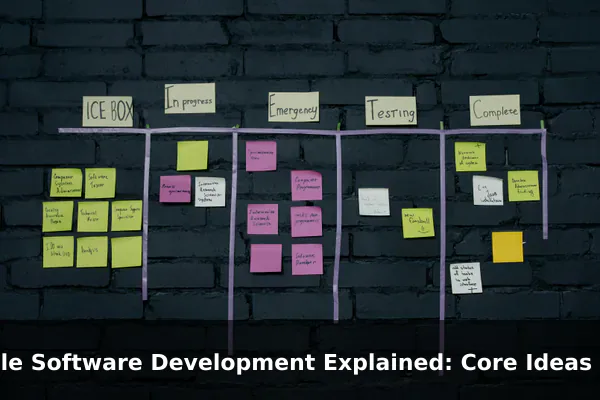
Software development is rarely predictable. Requirements shift, priorities change, and building the wrong thing is an expensive mistake. Agile software development emerged as a direct answer to these challenges, offering teams a more flexible and collaborative way to plan, build, and deliver software. Instead of mapping out every detail upfront and delivering a finished product months later, Agile teams work in short cycles, learn from real feedback, and continuously improve what they produce.
Since its formalization in 2001, Agile has grown from a niche practice used by small developer groups into the most widely adopted software development approach in the world. Yet many people still associate it with vague buzzwords or confusing jargon. This article explains what Agile actually means, how its core principles operate in practice, and why it delivers measurable benefits to both development teams and businesses.
What Agile Software Development Means
Agile is not a single tool, programming language, or software platform. It is a mindset and methodology built around continuous collaboration, incremental delivery, and ongoing adaptation. The word itself — agile — means able to move quickly and change direction easily, which captures exactly what the approach enables.
The concept was formally defined in the Agile Manifesto, a document produced in 2001 by a group of experienced software practitioners. The Manifesto establishes four foundational values that guide every Agile team:
- Individuals and interactions over processes and tools
- Working software over comprehensive documentation
- Customer collaboration over contract negotiation
- Responding to change over following a fixed plan
These values do not reject planning or documentation entirely. They simply prioritize people, functional products, and flexibility over rigid processes that can slow development or produce software that misses user needs entirely.
The most common comparison is with Waterfall development, a sequential approach where each project phase — requirements, design, coding, testing, deployment — must complete before the next one begins. Waterfall suits stable, predictable projects well. For software products where needs evolve, it frequently results in problems that surface too late and cost too much to fix.
The Core Ideas Behind Agile
The Agile Manifesto is backed by twelve guiding principles. Together they share a common thread: deliver value early and often, welcome change as a normal part of the process, and build products through close human collaboration rather than isolated planning.
Iterative and Incremental Delivery
Agile teams work in short development cycles called iterations or sprints, typically lasting one to four weeks. At the end of each cycle, the team delivers a working piece of software that stakeholders can see, test, and respond to. The product grows incrementally, shaped by real feedback rather than early assumptions that may quickly become outdated.
Customer Collaboration and Continuous Feedback
Maintaining close contact with the customer or end user is central to Agile. Rather than delivering a finished product at the very end of a long process, teams regularly demonstrate what they have built and invite feedback. This prevents the costly mistake of building features that technically work but fail to solve the right problem.
Adaptability and Embracing Change
In traditional development, late change requests can derail an entire project because the plan is locked. Agile treats change as expected and manageable. When requirements evolve — and they almost always do — the team adjusts priorities rather than forcing the original plan to hold when it no longer fits reality.
Continuous Improvement Through Reflection
Agile teams regularly reflect on how they work, not just what they build. Structured retrospectives at the end of each sprint give the team space to identify what is working and what needs to change. Over time, this builds a culture of learning that makes teams progressively faster and more effective.
How Agile Works in Real Projects
Understanding Agile in theory is helpful. Seeing how it operates in a real development project makes it concrete. A typical Agile project runs through a set of recurring activities that keep work visible and progress steady.
The Product Backlog
Every Agile project maintains a product backlog — a prioritized list of features, fixes, and improvements the product needs. The product owner, who is responsible for the product’s direction, manages this list and ensures the most valuable items always sit at the top ready for the team to pick up.
Sprint Planning
Before each sprint begins, the team holds a planning session to select which backlog items they will address during the upcoming cycle. Large features are broken into smaller tasks, effort is estimated, and the team commits to a realistic and achievable scope for the sprint ahead.
Daily Standups
Each day during the sprint, team members hold a short meeting — usually no longer than fifteen minutes. Each person answers three questions: what did they complete yesterday, what will they work on today, and is anything blocking their progress? This daily habit keeps communication flowing and surfaces problems before they grow.
Sprint Review and Retrospective
At the end of the sprint, the team demonstrates their working software to stakeholders and collects direct feedback. Separately, they run a retrospective focused on their process — discussing what went well and what to improve. These two closing meetings complete the feedback loop on both the product and the team’s way of working.
Popular Agile Frameworks and Methods
Agile is an umbrella concept. Several specific frameworks implement its principles in different ways, each suited to different team sizes and project types. Understanding the main options helps teams choose the approach that fits their context.
Scrum
Scrum is the most widely used Agile framework worldwide. It defines specific roles — Product Owner, Scrum Master, and Development Team — fixed-length sprints, and a clear set of ceremonies: planning, daily standup, review, and retrospective. Scrum works especially well for teams building complex products where requirements need regular reassessment and refinement.
Kanban
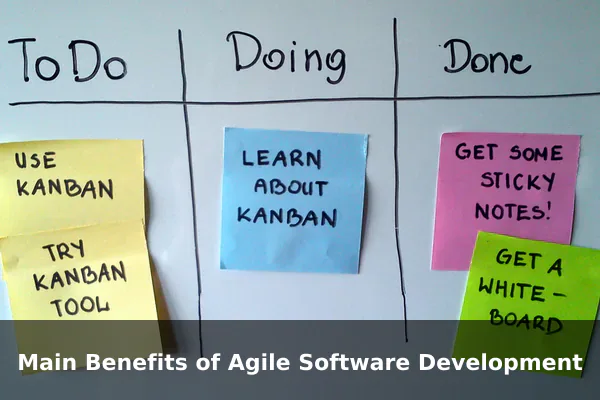
Kanban focuses on visualizing work and limiting how much work is in progress at any given moment. Teams use a board divided into columns — typically To Do, In Progress, and Done — to track tasks as they move through the pipeline. Kanban is particularly effective for teams with continuous, unpredictable incoming work rather than defined project cycles.
Other Notable Approaches
Other Agile methods include Extreme Programming (XP), which emphasizes technical practices such as test-driven development and pair programming, and SAFe (Scaled Agile Framework), designed to help large organizations apply Agile principles consistently across many teams simultaneously.
Main Benefits of Agile Software Development
The widespread adoption of Agile reflects genuine, proven advantages that appear when teams apply its principles with commitment. These benefits span the entire product lifecycle and affect both what teams build and how they work together.
- Faster time to value: Working software is delivered every sprint, so users benefit sooner rather than waiting for a single large release.
- Higher product quality: Frequent testing and feedback cycles catch defects early, before they compound and become expensive to address.
- Lower project risk: Incremental delivery limits exposure. If something goes wrong, only a small slice of work is affected and the team can correct course before the problem scales.
- Stronger team communication: Daily standups, planning sessions, and retrospectives create consistent habits of transparency and open discussion that build team cohesion over time.
- Better stakeholder alignment: Regular demos and check-ins keep clients and business owners informed and involved, significantly reducing the risk of delivering a product that misses their actual needs.
- Genuine adaptability: When business conditions shift or market feedback changes priorities, Agile teams can reprioritize without discarding months of completed work.
Common Agile Challenges and Misunderstandings
Agile is not a universal fix, and adopting it honestly means acknowledging the challenges that come with the approach.
Agile Does Not Mean Skipping Planning
A persistent misunderstanding is that Agile teams avoid planning. In reality, Agile teams plan constantly — they just plan in shorter windows and expect those plans to evolve. The shift is not from more planning to less, but from rigid upfront planning to continuous adaptive planning.
Stakeholder Engagement Is Not Optional
Agile depends on regular, meaningful feedback from customers and stakeholders. When key people are unavailable or disengaged, teams can complete sprint after sprint without valid direction. That defeats the entire purpose of iterative development and leads to the same misalignment Agile was designed to prevent.
Unclear Priorities Undermine Every Sprint
Without a well-maintained, clearly prioritized backlog, Agile teams lose focus. A weak product owner or poorly defined business goals result in sprints filled with low-value tasks, and the team loses the momentum that Agile is designed to generate.
When Agile Is the Right Fit
Agile delivers its strongest results in specific environments. Choosing it for the right reasons — rather than because it is popular — is what separates teams that thrive with Agile from those that struggle with it.
- Projects where requirements are expected to evolve during development
- Products with regular access to user feedback, such as consumer apps, SaaS platforms, or internal tools
- Teams that are small to mid-sized and can communicate closely and frequently
- Organizations where speed to market is a genuine competitive priority
- Environments where stakeholders can commit time to regular involvement and feedback
Projects with fully defined requirements, strict regulatory constraints, or deep hardware dependencies may be better served by structured sequential methods or a hybrid combining both Agile and Waterfall elements. The choice should always follow the nature of the project, not a blanket preference.
Key Takeaways for Teams and Businesses
Agile software development is not a passing trend. It represents a fundamental shift in how the industry thinks about building products — one that prioritizes learning, collaboration, and delivering value over rigid adherence to an upfront plan.
For development teams, the practical message is straightforward: work in short cycles, get feedback early, and reflect regularly on how to improve. For businesses, Agile reduces the risk of large investments going in the wrong direction by keeping the product closely aligned with real user needs at every stage of development.
Whether a team adopts Scrum, Kanban, or another Agile framework, the underlying principles remain the same: deliver working software often, collaborate closely with those who use it, welcome change rather than resist it, and always look for ways to work smarter. When teams genuinely internalize these ideas rather than just following the rituals of a named methodology, Agile becomes a real competitive advantage — not just a label on a project management board.
